
The Great Wall of Los Angeles
The 1980s: The Taste of Bitter Fruit
May 2026 – ongoing
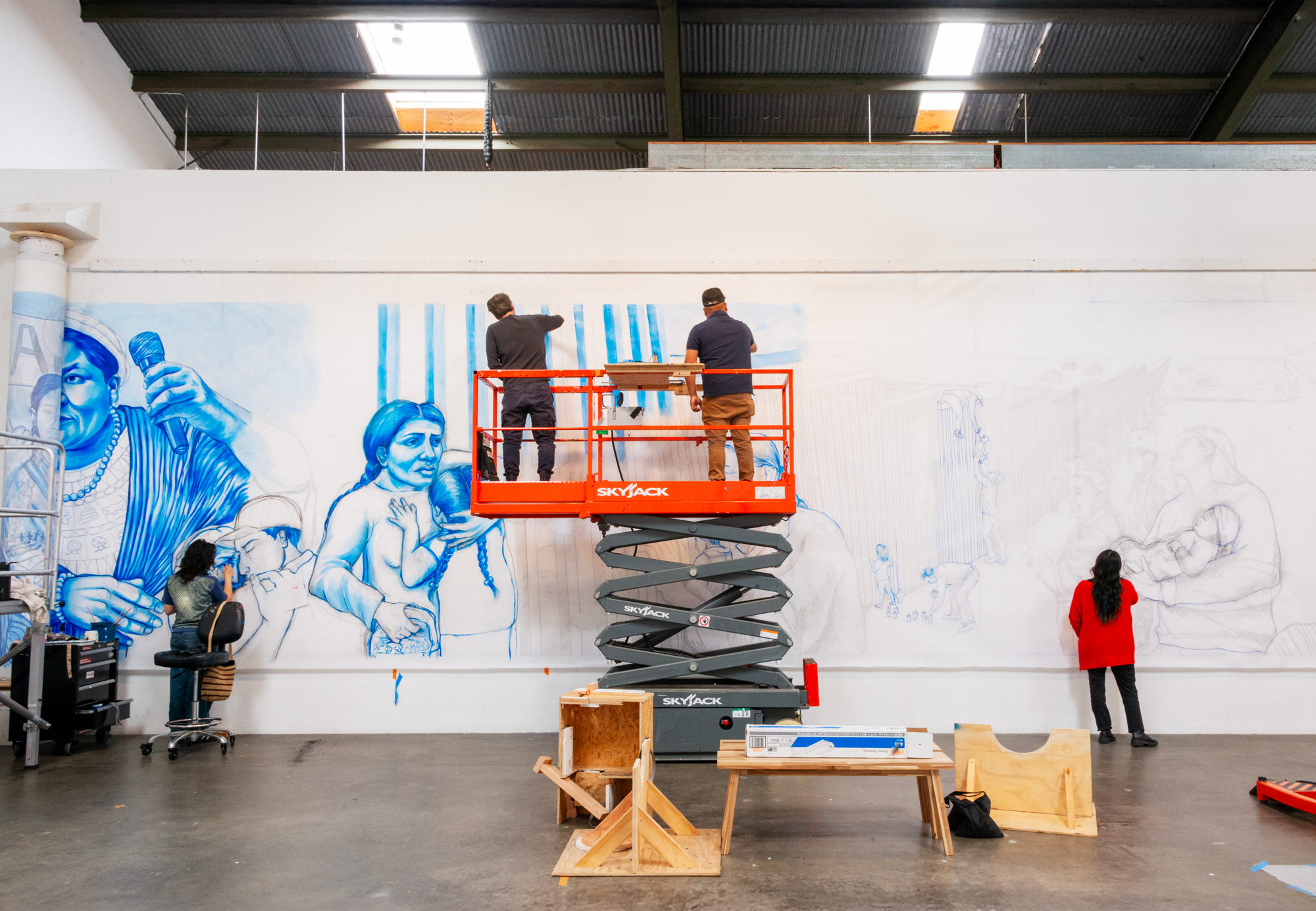
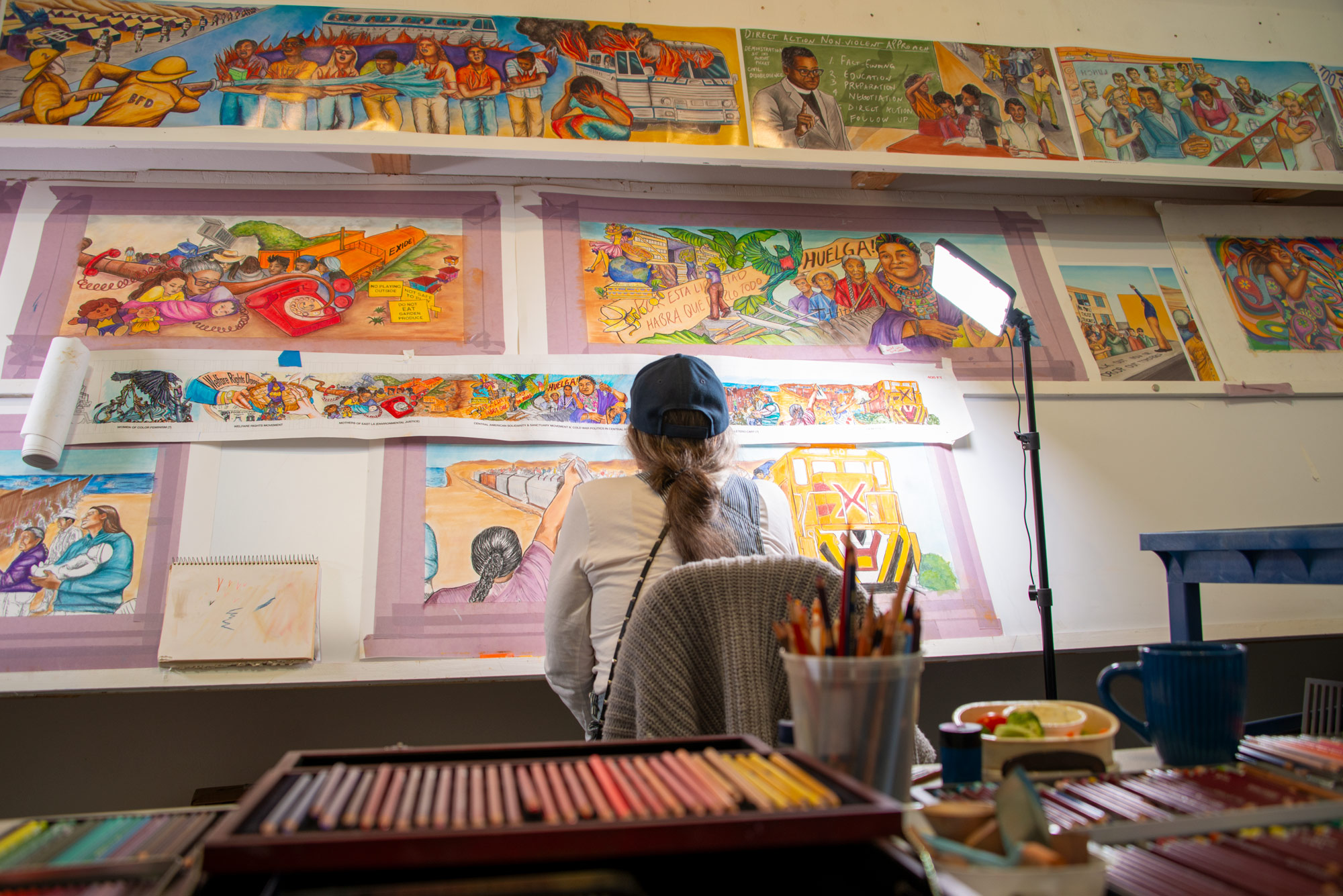
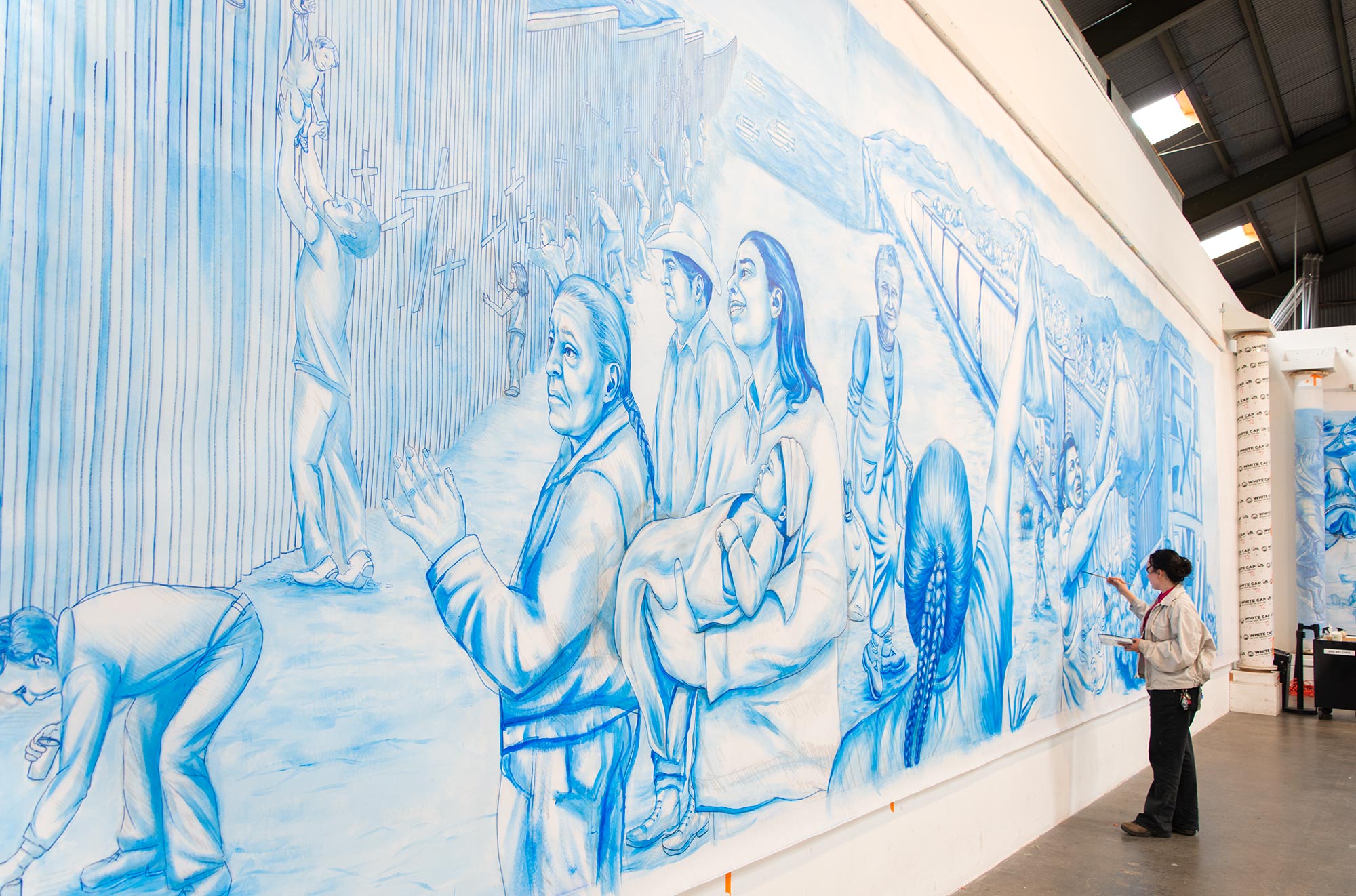
The 1980s: The Taste of Bitter Fruit focuses on grassroots organizing that formed in resistance to the turn towards conservatism in American politics. This section of the Great Wall of Los Angeles highlights the rise and ruin of Reaganomics, which was an economic policy based on a trickle-down theory that assumed the working class would benefit from the government cutting corporate and high-income earner taxes. However, this theory was severely flawed and wealth inequality grew tremendously during the 1980s due to these tax cuts.
In combination with Reaganomics, the president instituted other policies that directly harmed working-class people and left structural problems we still reckon with today. The closure of mental health facilities directly led to an increase in the unhoused population. In 1984, advocates rallied around Tent City to raise awareness of the rising rates of homelessness in Los Angeles. Similar grassroots campaigns were taking shape throughout the decade. Students of the Free South Africa Movement urged their universities to divest from Apartheid South Africa and the release of political prisoner Nelson Mandela. First Lady Nancy Reagan launched the feeble Just Say No program in response to the growing crack and cocaine epidemic, which disproportionately harmed Black and brown communities with over policing and mass incarceration as a result of President Reagan’s ramped-up War on Drugs. In response to continued attacks on their communities, counterculture movements such as Punk, Rap, and Hip-Hop developed in Los Angeles and became vessels for disenfranchised people to speak to their real-life experiences. Alice Bag’s lyrics, “you say justice is colorblind, I know you’re lying,” highlights the active resistance of the punk scene.
In 1984, the Olympic Games returned to Los Angeles, featuring the first-ever Olympic women’s marathon event. While Los Angeles became a more globally connected city, Asian Americans faced xenophobic violence due to American resentment over booming East Asian economies. LGBTQ communities across the nation were devastated by the AIDS epidemic and the lack of federal support as hospitals overflowed. The signing of the Americans with Disabilities Act saw a rise in disability activism and visibility. Feminist women of color highlighted their unique struggles and experiences, which diverged from those of white feminists. National grassroots resistance was created by women of color to combat attacks on welfare, while locally, Mothers of East LA fought back against manifestations of environmental racism. The US-funded civil wars and neo-colonial economic domination in Central America led to the starvation and displacement of thousands who fled to the US as refugees, many opting to use the deadly La Bestia train to come North. Women of rural Mexico formed Las Patronas to help migrants survive the dreaded journey. This chapter of the mural uplifts the grassroots organizing of everyday people to shape their own future in the face of tremendous systemic obstacles and endless human greed.
Support our mission to promote, preserve, and produce public art like the Great Wall of Los Angeles Mural!
May 2026 – ongoing
PLAN YOUR VISITS
SPARC at Bergamot Station
2525 Michigan Ave Unit B1,
Santa Monica, CA 90404
The Great Wall of Los Angeles expansion is made possible by


